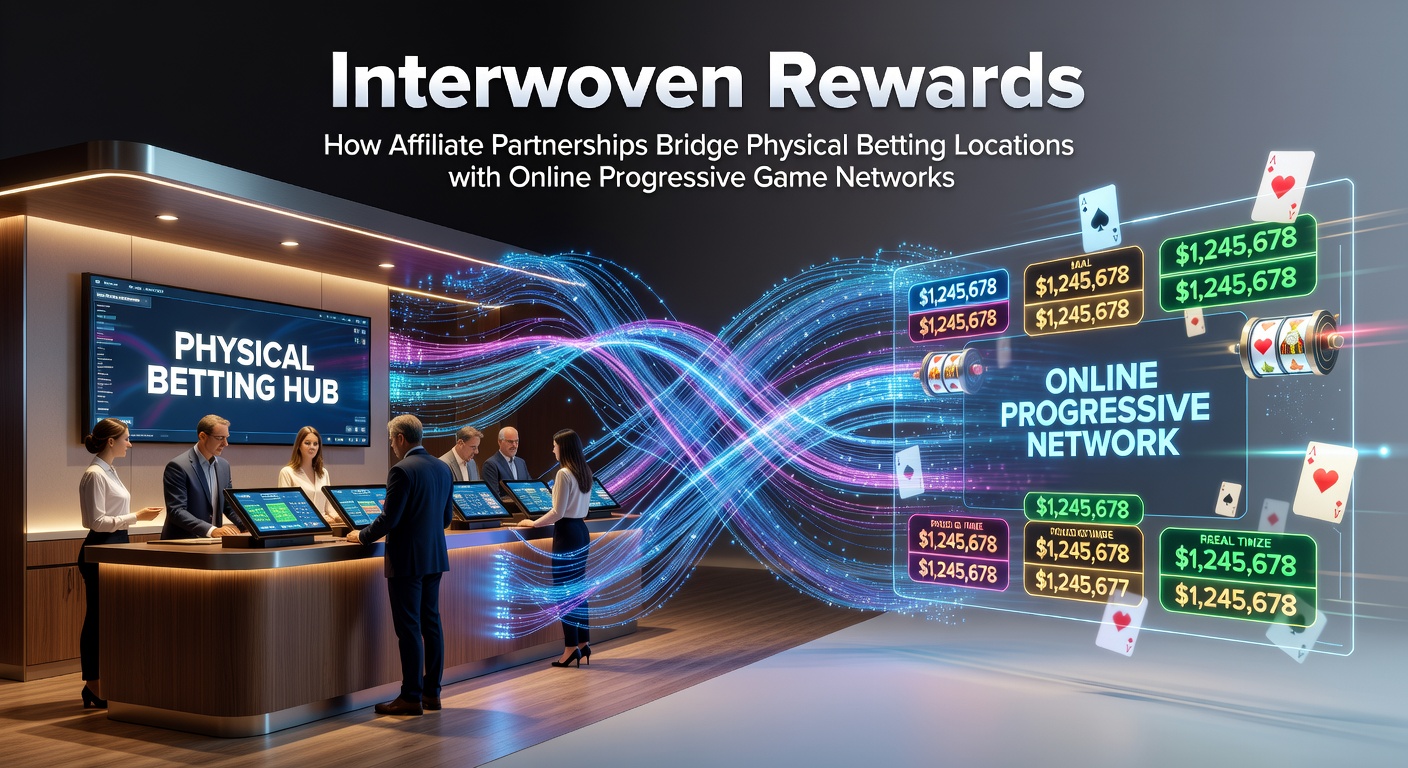
Interwoven Rewards: How Affiliate Partnerships Bridge Physical Betting Locations with Online Progressive Game Networks
Physical betting locations have long operated as standalone venues where players place wagers on sports, slots, and table games, yet affiliate partnerships now link these sites directly to online progressive game networks that pool jackpots across multiple platforms and jurisdictions. These connections allow reward points earned at a betting shop counter to convert into entries for online progressive slots, while online wins feed back into loyalty tiers usable at physical locations.
Mechanics of Cross-Platform Integration
Affiliate networks track player activity through unified accounts that merge data from both environments, so a customer who visits a betting shop in one city accumulates points that unlock higher payout tiers in online progressive games hosted elsewhere. Software platforms handle the data exchange in real time, converting shop-based bets into digital credits that contribute to shared jackpot pools. Operators report that such systems increase player retention because participants see tangible value when their physical visits directly influence online prize potential.
Regulatory frameworks in various regions support these arrangements when operators maintain separate ledgers for land-based and digital activity. Data from industry reports shows that integrated loyalty programs grew steadily through 2025, setting the stage for further expansion by May 2026 when several networks introduced enhanced cross-border reward syncing features.
Player Tracking and Reward Flow
Modern affiliate systems employ player cards and mobile apps that record every transaction, whether it occurs at a physical terminal or through an online interface. Points generated from slot play at a betting shop can transfer automatically to an online progressive network, raising the player's multiplier on future jackpot contributions. Conversely, online wins sometimes generate vouchers redeemable for free bets or merchandise at partnered physical sites. Observers note that this bidirectional flow creates a continuous engagement loop that single-channel programs rarely achieve.

Take one regional operator in North America that partnered with an international progressive network in early 2025; the arrangement allowed shop patrons to enter drawings for online mega-jackpots using accumulated floor play, while digital users received location-specific bonuses for nearby betting shops. Figures released by the operator indicated a measurable uptick in cross-channel visits within six months of launch.
Regulatory and Technical Considerations
Jurisdictions enforce strict separation between physical and digital wagering ledgers, yet affiliate agreements navigate these rules by routing rewards through licensed intermediaries rather than direct fund transfers. The Nevada Gaming Control Board has issued guidance on data-sharing protocols that permit loyalty integration when audit trails remain intact. Similar frameworks exist in other markets, including oversight from the Malta Gaming Authority, which evaluates how progressive contributions from land-based terminals comply with online pool standards.
Technical standards require encrypted data pipelines and real-time reconciliation to prevent discrepancies between physical and digital point balances. Research published by university-affiliated gaming studies programs highlights that robust encryption and regular third-party audits reduce error rates in reward transfers to below one percent across tested networks.
Market Expansion Patterns
Affiliate partnerships have accelerated in regions where physical betting shops seek digital diversification without building full online platforms from scratch. Instead of competing directly with established digital operators, shops join existing progressive networks through affiliate agreements that share revenue from jackpot contributions. This model appears in multiple continents, with operators in Australia and Canada adopting similar structures after observing results from European trials.
By May 2026 several networks had rolled out mobile apps that notify players when shop-earned points reach thresholds for online progressive entries, further tightening the connection between the two environments. Industry organizations such as the American Gaming Association have documented rising participation rates in these hybrid programs, attributing growth to the convenience of unified accounts rather than separate loyalty schemes.
Conclusion
Affiliate partnerships continue to reshape how physical betting locations interact with online progressive game networks by creating seamless reward pathways that span both domains. Data exchange protocols, regulatory compliance measures, and player tracking technologies form the backbone of these systems, allowing points and prizes to move fluidly while maintaining separate operational ledgers. As networks expand their geographic reach and refine synchronization tools, the integration between shop floors and digital jackpot pools is expected to deepen without altering the fundamental licensing distinctions that govern each sector.