
Global Data Exchange Standards Reshaping Reward Allocation Across Casino Affiliate Systems
Data protocols that span multiple jurisdictions now determine how affiliate networks track player activity and allocate bonuses in casino operations, since these frameworks dictate what information can move between regions and under what conditions. Observers note that affiliate programs rely on shared user data to verify eligibility, calculate commissions, and distribute promotional rewards, yet laws in different countries impose varying restrictions on that flow. In August 2026 several new compliance requirements took effect in parts of North America and Asia, requiring networks to segment data handling by origin country before any bonus calculation occurs.
Core Elements of Cross-Border Data Protocols
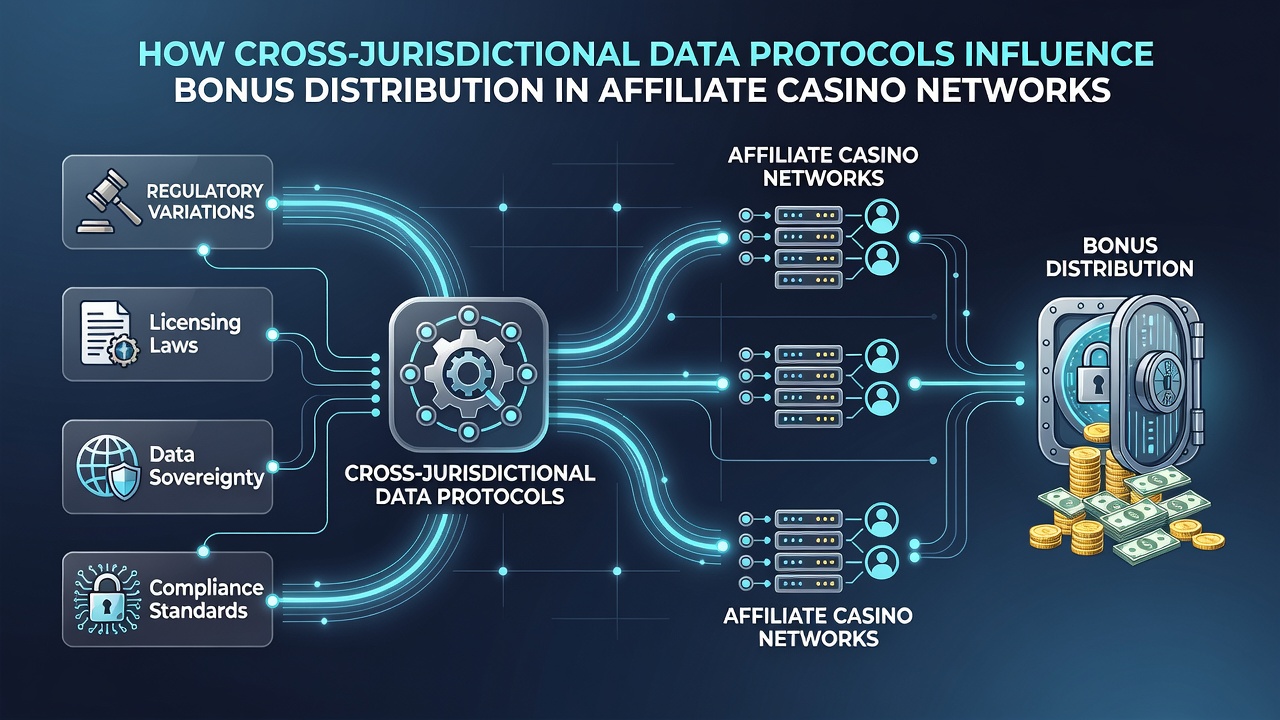
Cross-jurisdictional data protocols consist of technical and legal rules that govern the transfer, storage, and processing of personal information across national boundaries, and these rules directly affect how affiliate platforms record player deposits, wagers, and bonus redemptions. Researchers at academic institutions have documented that protocols such as the EU's data protection standards and Canada's privacy legislation require explicit consent mechanisms and data minimization practices, which in turn limit the granularity of information affiliates can use when assigning tiered bonus structures. When protocols demand anonymization or localization, networks must adjust their reward algorithms to operate on aggregated rather than individual datasets, altering payout timelines and eligibility windows.
Affiliate Network Mechanics and Bonus Flows
Affiliate networks function as intermediaries that connect casino operators with marketing partners, tracking referred players through unique identifiers and distributing bonuses based on performance metrics. Data from regulatory filings shows that these networks often operate across dozens of jurisdictions simultaneously, so protocol differences force them to maintain separate databases for each region. One study revealed that networks using unified reward systems experienced delays in bonus distribution when cross-border transfers required additional verification steps under emerging 2026 rules in Australia and Singapore. Those who manage such systems report that protocol compliance now includes real-time checks for data origin before any commission or player bonus is finalized.
Regional Variations and Their Operational Impact
European frameworks emphasize individual rights to data portability and erasure, which means affiliates must remove player records upon request and recalculate bonus entitlements without the deleted information. In contrast, certain Asian regulatory bodies prioritize data residency, compelling networks to store records locally and limiting how quickly bonuses tied to international player groups can be processed. Figures released by industry trade groups indicate that networks operating in both zones have increased their use of edge computing solutions to satisfy localization rules while still feeding summary data into central bonus engines. The result appears in staggered distribution schedules where bonuses for players in strict-residency countries clear days later than those in more permissive regions.
Compliance Costs and Technical Adaptations
Networks have responded to protocol complexity by investing in modular tracking software that applies jurisdiction-specific filters before bonus calculations run. According to reports from the European Gaming and Betting Association, operators that adopted these systems saw a measurable rise in administrative overhead during the first half of 2026, particularly when handling multi-country affiliate campaigns. Data indicates that some networks now route bonus eligibility queries through compliance layers that check against lists of permitted data elements, preventing the accidental inclusion of restricted fields such as precise location timestamps or full payment histories. This layered approach preserves the integrity of reward distribution while satisfying divergent legal demands.
Player Tracking Challenges in Multi-Jurisdiction Environments
Accurate player tracking underpins bonus distribution, yet cross-border protocols often restrict the persistence of identifiers across borders. Research from university-led projects on digital gambling ecosystems highlights that fragmented identifiers force affiliates to rely more heavily on probabilistic matching techniques, which can produce discrepancies in reported activity and subsequent reward amounts. In practice, networks have introduced reconciliation periods where bonus payments remain pending until data from each jurisdiction clears verification, extending the interval between player action and reward receipt. Observers note that these delays have become standard in campaigns spanning both North American and European markets since the August 2026 updates.
Future Protocol Developments and Network Responses
Industry associations continue to collaborate on harmonized data exchange templates that could reduce friction in bonus allocation, though full adoption remains uneven across regions. Government agencies in Canada and Australia have signaled interest in pilot programs that test standardized consent tokens for cross-border gambling data, potentially allowing faster bonus processing if the tokens meet each jurisdiction's requirements. Networks that participate in these pilots report preliminary success in streamlining reward calculations without violating residency or portability rules. The trajectory suggests continued investment in protocol-aware infrastructure as more jurisdictions refine their data governance approaches.
Conclusion
Cross-jurisdictional data protocols have become integral to the operational logic of affiliate casino networks, shaping every stage of bonus distribution from player identification through reward disbursement. Evidence from regulatory filings and industry analyses demonstrates that networks must continuously adapt their systems to accommodate shifting legal and technical standards across borders. As new requirements rolled out in August 2026 illustrate, the ability to segment, verify, and reconcile data according to origin jurisdiction now determines both the speed and accuracy of bonus allocation. Those who oversee these networks therefore treat protocol compliance as a core component of reward system design rather than an ancillary concern.