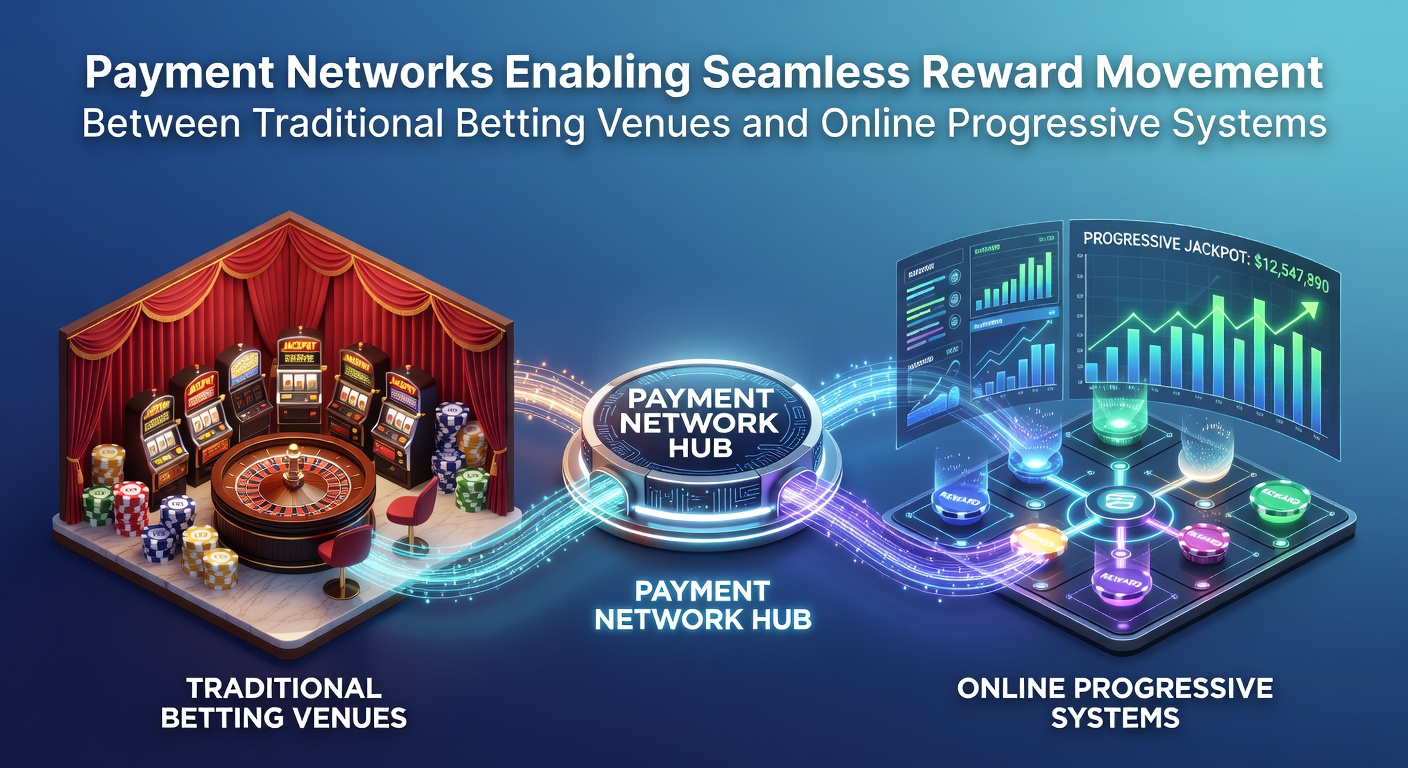
Bridging Rewards: Payment Networks Uniting Traditional Venues with Online Progressive Gaming
Payment networks have developed specialized protocols that allow loyalty points and reward balances earned at physical betting locations to transfer directly into online progressive gaming platforms, creating unified player accounts across both environments, and observers note this integration relies on secure APIs combined with encrypted transaction ledgers that update in real time.
Traditional venues collect data through player cards or mobile apps at slot machines and table games, after which the information routes through centralized processors that verify eligibility before pushing equivalent values to online wallets, whereas online progressive systems feed back contributions from jackpot pools when players redeem points during digital sessions.
Core Mechanisms Driving Cross-Platform Transfers
Processors such as those operated by major financial technology firms handle the movement by mapping reward currencies from land-based systems to digital tokens that maintain parity, and this process incorporates multi-factor authentication along with compliance checks that align with jurisdictional requirements. Data from industry reports shows transaction volumes for these reward movements increased steadily through 2025 as more operators adopted interoperable software standards.
One study from academic researchers at the University of Nevada documented how these networks reduce friction by eliminating manual redemption steps, allowing points accumulated during a weekend at a resort casino to appear instantly in a player's online progressive slot balance the following Monday morning. The same research highlighted that settlement times average under three seconds when both systems connect through certified gateways.
Regulatory Landscape and Compliance Standards
Government agencies across different regions enforce rules that govern how rewards cross physical and digital boundaries, with the Nevada Gaming Control Board requiring detailed audit trails for every point transfer while Canadian provincial regulators in Ontario mandate separate reporting for cross-border player activity. These frameworks ensure that progressive jackpot contributions remain traceable whether they originate from a physical terminal or an online session.
Industry organizations including the American Gaming Association have published guidelines that encourage operators to maintain segregated ledgers for reward pools, preventing commingling of funds between traditional venues adn online platforms. According to their documentation, operators who implement these standards report fewer discrepancies during routine inspections.
What's interesting is how the technology accommodates regional differences, such as currency conversion layers that activate automatically when a player moves from a US-based casino to an online system serving international users. This setup supports seamless movement without requiring players to initiate separate exchanges.

Technological Integration Examples in Practice
Operators in multiple states have rolled out pilot programs where payment networks link hotel loyalty tiers directly to online progressive jackpot contributions, and participants who qualify for higher tiers at physical properties receive boosted multipliers when they switch to digital play. These programs rely on tokenization methods that obscure actual account details while preserving reward value throughout the transfer.
Researchers tracking adoption patterns found that networks incorporating blockchain elements for verification experienced fewer disputes over point validity, particularly when progressive systems update jackpots based on aggregated contributions from both venue types. The approach also allows operators to apply consistent responsible gaming limits across environments since the same player profile governs activity regardless of location.
Developments Anticipated Around May 2026
New platform launches scheduled for May 2026 are expected to expand these capabilities further by incorporating additional progressive game types into existing reward ecosystems, with several operators announcing integrations that will let physical venue points contribute to shared online prize pools in previously unavailable categories. Regulatory updates in select jurisdictions are also slated to clarify tax treatment for transferred rewards during this period.
Payment processors have already begun testing enhanced encryption standards that will support higher transaction volumes once these expansions activate, and figures from trade group analyses indicate that reward movement volumes could rise by double digits once the new systems stabilize.
Security Protocols and Data Handling Practices
Encryption standards mandated by financial regulators require end-to-end protection for every reward transfer, which includes token masking and session-specific keys that expire after each movement completes. Observers note that these measures align with broader payment card industry requirements while adding gambling-specific controls that flag unusual redemption patterns across venue types.
Operators maintain logs that record the origin venue, transfer timestamp, and destination platform for every transaction, allowing audits to reconstruct complete player histories when necessary. This documentation supports both internal compliance teams and external reviewers who examine how progressive contributions flow between environments.
Conclusion
Payment networks continue to refine the pathways that connect rewards earned at traditional betting venues with balances usable in online progressive systems, relying on standardized protocols, regulatory oversight from multiple regions, and advancing security measures to maintain accuracy and traceability. As new integrations prepare for rollout in May 2026, the infrastructure supporting these movements appears positioned to handle increased scale while preserving the separation required by different jurisdictional rules. Data from ongoing implementations shows consistent performance across tested environments, with operators adapting their systems to meet both technical and compliance demands simultaneously.