Affiliate Earnings Driving Jackpot Sustainability in Blended Payment Ecosystems for Online Gambling
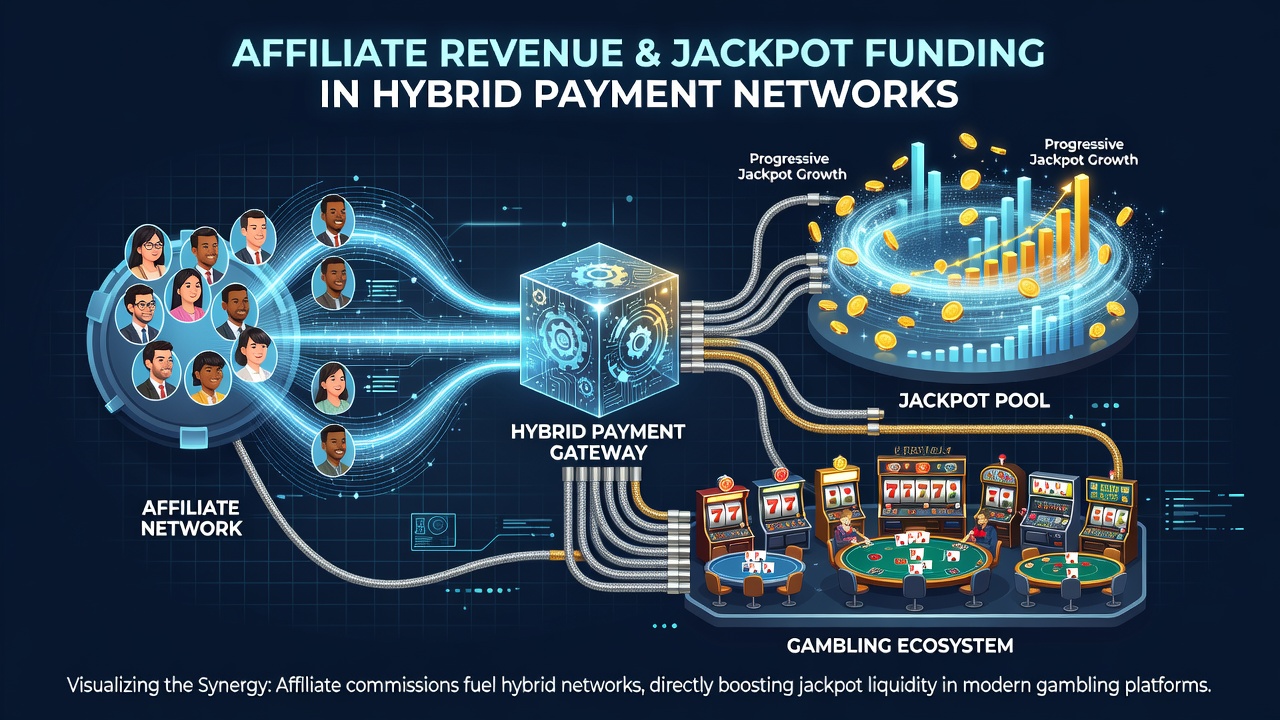
Hybrid payment networks have emerged as central mechanisms where affiliate revenue directly supports jackpot funding across digital and physical gambling platforms, and data from industry reports shows these systems integrate transaction processing with marketing partnerships to allocate portions of commissions into progressive prize pools. Researchers at the University of Nevada Reno documented in 2025 studies how such networks channel affiliate earnings through secure gateways, allowing operators to maintain liquidity while expanding jackpot offerings without relying solely on player wagers.
Mechanics of Revenue Allocation in Hybrid Systems
Affiliate programs generate commissions based on referred player activity, and these funds flow into hybrid infrastructures that combine traditional banking rails with digital ledgers to distribute percentages toward jackpot reserves. Observers note that in August 2026 several platforms updated their protocols to automate these transfers, reducing delays between revenue collection and prize pool contributions while complying with regional oversight from bodies like the Nevada Gaming Control Board. This process ensures that marketing partnerships contribute measurable amounts to shared jackpots, creating a feedback loop where increased affiliate traffic correlates with larger prize accumulations.
Payment Integration and Compliance Factors
Hybrid networks employ multi-layer verification that processes deposits, withdrawals, and affiliate payouts simultaneously, and figures from the European Gaming and Betting Association reveal that integration points often allocate 5 to 15 percent of commission revenue directly to jackpot funding lines. Those who've examined these flows point out that security protocols prevent commingling of funds, maintaining separate ledgers for operational costs versus prize contributions, which helps operators meet audit requirements across jurisdictions including Canada and Australia.
One study revealed that platforms using these blended systems experienced steadier jackpot growth during periods of fluctuating player volumes, because affiliate revenue provides a buffer independent of direct betting activity. Experts have observed that this stability encourages operators to promote larger progressive networks that span multiple sites, linking smaller affiliates into collective prize structures.
Regional Patterns and Network Expansion
In North American markets, hybrid payment setups have accelerated since regulatory approvals for digital integrations, while Australian frameworks emphasize transparent reporting of how affiliate earnings support prize pools under oversight from the Australian Communications and Media Authority. Data indicates that cross-border networks allow revenue from one region to bolster jackpots accessible in others, provided compliance layers handle currency conversion and tax withholding automatically.

Turns out that affiliate-driven contributions become especially relevant during high-traffic events such as sports seasons or tournament cycles, when referred players increase commission inflows that operators route proportionally into expanding prize tiers. Researchers discovered through transaction analysis that these additions can represent up to 20 percent of monthly jackpot increments on certain networks, supplementing the core rake from player bets.
Case Examples from Platform Operations
Take one network that connected multiple affiliate partners to a centralized jackpot engine, where revenue shares were tracked in real time through API connections between marketing dashboards and payment processors. This setup allowed operators to publish verifiable contribution percentages, satisfying demands from both regulators and partner marketers who wanted clear visibility into how their efforts supported prize growth. Similar models appear in European operations that link affiliate earnings to shared progressive systems spanning several countries.
What's interesting is how these networks adapt to seasonal variations, adjusting allocation rates when affiliate volumes spike or dip, yet always preserving the baseline contributions required by licensing conditions. Government reports from multiple regions show that transparent tracking of such flows reduces disputes between operators and marketing partners while supporting overall ecosystem liquidity.
Future Developments in Revenue and Prize Integration
Industry organizations continue to refine standards for hybrid payment frameworks, focusing on interoperability that lets affiliate revenue move efficiently across different jackpot structures without manual reconciliation. Academic papers published in 2026 examined potential expansions into tokenized reward systems, where commission earnings convert automatically into contributions that scale with network participation levels.
Evidence suggests continued growth in these integrated models as more jurisdictions authorize digital gambling expansions, because the combination of affiliate incentives and jackpot funding creates measurable value for all participants. Those who've studied transaction patterns note that platforms maintaining clear separation between revenue sources achieve higher compliance scores during periodic reviews.
Conclusion
Hybrid payment networks demonstrate how affiliate revenue can sustain and expand jackpot funding within gambling ecosystems by routing commissions through secure, multi-functional transaction layers. Data from regulatory and academic sources confirms these mechanisms operate across regions with varying oversight structures, delivering consistent contributions that supplement traditional wager-based pools. As networks evolve, the documented patterns of allocation and compliance provide a factual basis for understanding revenue dynamics in this segment of the industry.